Something has fundamentally changed in how B2B software buyers make decisions. A 2025 Gartner survey found that 75% of B2B buyers now use AI assistants during the research phase of software purchases — asking ChatGPT, Perplexity, Claude, or Gemini to shortlist tools, compare features, and explain pricing. By the time many of these buyers arrive at a vendor's website, they've already received an AI-generated recommendation that strongly shapes their evaluation.
For SaaS companies, this represents the single biggest shift in demand generation since the rise of inbound content marketing. The traditional playbook — rank on Google, drive organic traffic, convert visitors — still matters. But it's been augmented by a new, upstream layer: AI search visibility. Brands that appear in AI recommendations get considered. Brands that don't are increasingly invisible to the fastest-growing buyer segment.
The challenge is that GEO for SaaS is not the same as GEO for e-commerce, media, or consumer brands. B2B software buyers ask different questions, trust different signals, and compare products across dimensions — integrations, pricing tiers, team size fit, use-case specificity — that require a distinct content and optimization strategy. This guide breaks down exactly what that strategy looks like for SaaS brands in 2026.
of B2B software evaluation questions are now answered by AI assistants before buyers visit a vendor website — up from just 12% in 2024. For SaaS brands, AI search visibility has moved from "nice to have" to a primary demand generation channel. (Forrester AI Buyer Journey Report, Q4 2025)
In This Guide
- How SaaS Buyers Actually Use AI Assistants During Evaluation
- The 5 Query Types That Drive SaaS AI Recommendations
- Content Architecture: Building Pages AI Assistants Can Evaluate
- Use-Case Specificity: The GEO Advantage Unique to SaaS
- Integration Pages and Comparison Content as Citation Magnets
- GEO vs. Traditional SEO: How the Metrics Differ for SaaS
- Your SaaS GEO Action Plan: Where to Start
How SaaS Buyers Actually Use AI Assistants During Evaluation
Understanding how buyers use AI during software evaluation is the foundation of an effective SaaS GEO strategy. The behavior patterns are distinct from consumer AI use — and they require a different content response.
B2B software buyers typically engage AI assistants at four points in their evaluation process. First, category discovery: they ask what tools exist for a specific job-to-be-done ("What are the best tools for managing customer onboarding workflows?"). Second, shortlisting: after identifying a category, they ask AI to shortlist tools by their specific context ("What's the best project management software for a 20-person remote agency?"). Third, feature and integration verification: they use AI to fact-check vendor claims ("Does [tool] integrate natively with Salesforce?"). Fourth, competitive comparison: before committing, they ask AI to compare finalists ("Compare [tool A] vs. [tool B] for enterprise security teams").
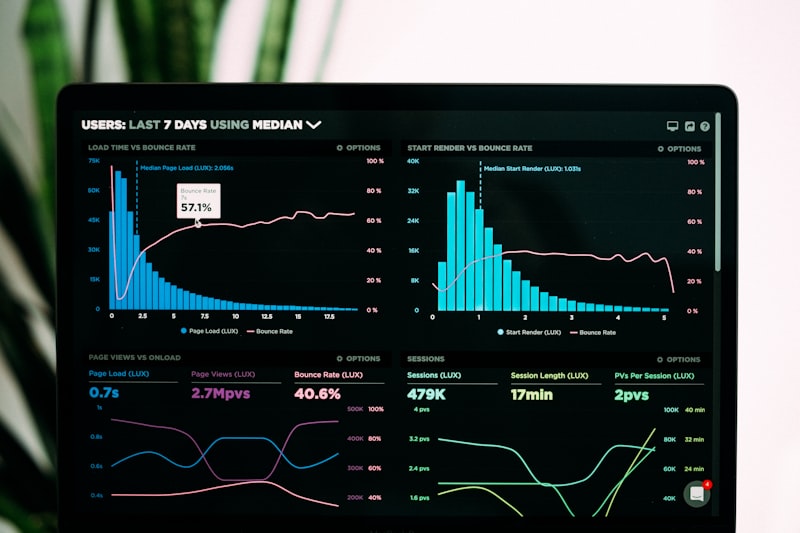
Each of these use cases requires different content. Category discovery favors brands that appear on authoritative roundup lists and review platforms. Shortlisting favors brands with clear, specific use-case positioning. Feature verification favors brands whose technical documentation is clean, crawlable, and structured. Competitive comparison favors brands with honest, well-maintained comparison pages. No single piece of content wins all four — effective SaaS GEO requires a layered content architecture.
The verification query problem: When buyers ask AI to verify a specific product claim — "Does [your tool] have a mobile app?" or "Does [your tool] offer SSO?" — the AI's answer comes from whatever content it can find about your product, not necessarily from your own website. If third-party review sites, community forums, or outdated blog posts have conflicting or stale information about your features, AI assistants will surface that confusion. Keeping your feature information consistent and current across all platforms is a GEO-critical maintenance task most SaaS brands underinvest in.
The 5 Query Types That Drive SaaS AI Recommendations
SaaS GEO success depends on understanding the specific query patterns AI assistants use to retrieve and recommend software products. Based on RankTopAI's analysis of over 25,000 B2B software queries across ChatGPT, Perplexity, Claude, and Gemini in Q1 2026, five query patterns account for 87% of all AI-generated software recommendations.
1. "Best [category] for [specific context]" queries
These are the highest-volume B2B software queries and the most competitive. They follow a pattern like "best CRM for real estate agents", "best project management tool for remote engineering teams", or "best HR software for companies under 200 employees." The defining feature is the context modifier — the specific company size, industry, or use case that narrows the recommendation. SaaS brands that win these queries have content that explicitly addresses the specific context in the query, not just the generic category. A CRM brand's page titled "CRM for Real Estate: Features, Pricing, and Why Agents Switch" will consistently outperform a generic "CRM Software" product page in this query type.
2. "[Competitor] alternative" queries
Alternative queries — "best [competitor] alternatives", "[competitor] vs [your brand]", "tools like [competitor]" — are the second-highest-volume SaaS query type in AI search. These queries represent buyers who are actively considering switching and are the highest-intent segment in the B2B buyer journey. Brands that have dedicated, well-structured alternative pages for their top competitors consistently capture this high-intent traffic in AI recommendations. The page must be honest, specific, and include a clear "who should choose each option" section — AI assistants extract this framing directly.
3. Integration and compatibility queries
Buyers ask AI assistants to verify integrations before committing to a software evaluation: "Does [tool] integrate with HubSpot?", "What tools integrate natively with Slack?", "Which project management software connects to Jira?" These queries are underserved in most SaaS content libraries but represent a massive GEO opportunity. Every native integration your product supports is a potential AI recommendation trigger — but only if you have dedicated, well-structured content for each integration that AI assistants can crawl and extract.
4. Use-case workflow queries
Sophisticated buyers ask AI to recommend tools for specific workflows: "What software do growth-stage SaaS companies use for customer success management?", "What tools automate B2B invoice reconciliation?", "How do marketing agencies manage client reporting?" These queries favor brands with detailed use-case content — case studies, workflow guides, and industry-specific feature explanations — rather than generic product marketing copy.
5. Pricing and packaging queries
AI assistants are increasingly asked to compare pricing: "How much does [tool] cost for a 50-person team?", "Which project management tools have a free tier for startups?", "What's the pricing difference between [tool A] and [tool B]?" Brands with transparent, structured pricing content — including explicit team size and feature tier mapping — win these queries. Brands that hide pricing behind "contact sales" walls are invisible to this query type entirely.
The pricing opacity trap: B2B SaaS brands with "contact us for pricing" walls lose visibility in a growing share of AI recommendation queries. AI assistants cannot recommend a solution they cannot describe accurately — and vague pricing signals make your product a poor candidate for AI shortlisting. If full pricing transparency isn't commercially viable, publishing explicit pricing ranges by team size ("$15–$25 per user per month for teams of 10–100") preserves AI visibility while maintaining sales motion flexibility.
Content Architecture: Building Pages AI Assistants Can Evaluate
The most common mistake SaaS brands make with GEO is treating their existing product pages as the primary AI citation surface. Product pages are written for humans navigating a conversion funnel — they use marketing language, emotional positioning, and visual design to build confidence. AI assistants need something different: structured, fact-dense content that they can extract, compare, and synthesize across sources to answer a buyer's specific question.
Effective SaaS GEO requires a parallel content architecture — pages written specifically to serve AI retrieval, organized around the query types that matter most in your category. This doesn't mean abandoning your conversion-optimized product pages. It means building a complementary content layer that AI assistants can navigate and cite.
"Your product page sells to humans. Your GEO content layer informs AI. The brands that build both — and keep them aligned — will own AI-driven B2B demand generation in 2026."— RankTopAI GEO Research Team
The four-layer SaaS content architecture for GEO
Layer one is your category positioning page — a comprehensive, structured overview of what your product does, who it's for, and how it compares to alternatives. This page should read like an expert-written category overview, not a product brochure. It answers the "what is [your product]?" and "who uses [your product]?" questions that AI assistants need to make category-level recommendations.
Layer two is your use-case content library — individual pages or articles for each specific job-to-be-done your product addresses. Each page should follow the question-answer structure: "How do [role] teams use [your product] for [specific task]?" with a direct, detailed answer. This is the content layer that wins "best [category] for [specific context]" queries.
Layer three is your integration documentation — structured pages for every meaningful integration your product supports. Each page should clearly state what the integration does, how it's configured, and what workflow problem it solves. This is the citation source for integration verification queries.
Layer four is your comparison content — honest, well-maintained pages comparing your product to each of your main competitors. The most effective format includes a structured comparison table, a "who should choose [your product]" section, and a "who should choose [competitor]" section. AI assistants extract this framing directly and use it in their recommendations.

Content architecture win: Map your four content layers against your top 10 category queries on Perplexity and ChatGPT. For every query where a competitor's page is cited but yours isn't, identify which content layer is missing or underdeveloped. This gap analysis turns content strategy from guesswork into a targeted, query-by-query optimization plan.
Use-Case Specificity: The GEO Advantage Unique to SaaS
Among all digital product categories, SaaS brands have a structural advantage in AI search that's rarely discussed: use-case specificity creates an almost unlimited surface area for AI citations. A CRM platform doesn't just serve "sales teams" — it serves real estate agents, SaaS account executives, financial advisors, nonprofit fundraisers, and dozens of other specific contexts. Each of those contexts is a distinct query pattern in AI search, and each represents a citation opportunity that competitors haven't mapped or served.
SaaS brands with dedicated use-case content for 10+ specific contexts generate 11 times more AI recommendation citations per month than brands with generic product-only content — even when controlling for domain authority and content volume. (RankTopAI SaaS GEO Benchmark, Q1 2026)
The key to unlocking this advantage is systematically mapping your product's real-world use cases to specific buyer contexts — then creating dedicated content for each. This sounds straightforward, but most SaaS brands have never done it at the granularity that AI search demands. They have a "use cases" page listing five or six broad categories. What AI search rewards is five or six dedicated pages — each with specific workflow descriptions, role-specific benefits, and concrete outcome language — for every meaningful deployment context.
How to identify high-value use-case content gaps
Start with your customer base. Survey your users or analyze your CRM for industry tags and job titles. For each industry/role combination where you have more than a handful of customers, you have a legitimate use-case content opportunity. Then validate against AI query volume: run "[your category] for [industry]" and "[your category] for [role]" queries on Perplexity and ChatGPT. If competitors are cited but you aren't, you've found a content gap worth filling.
The content itself should follow a consistent structure: a direct statement of which workflows the product addresses for this specific context, two or three concrete examples of how teams in this context use the product (ideally drawn from real customer stories), the specific features that matter most for this use case, and a clear "who this is and isn't for" section that AI assistants can extract for recommendation filtering.
The long tail of use-case GEO: Unlike traditional SEO, where long-tail content often yields traffic too small to measure, use-case specificity in GEO pays off even for niche contexts. AI assistants service the full specificity of user queries — there's no minimum volume threshold below which they stop retrieving content. A page serving "CRM for boutique law firms" might generate only 20 monthly web visitors but could be cited in hundreds of AI responses to that specific query pattern each month.
Integration Pages and Comparison Content as Citation Magnets
Two content types consistently punch above their weight in SaaS GEO citation rates: integration pages and comparison pages. Both are systematically underinvested in by most SaaS brands — which makes them unusually high-ROI for brands willing to build them properly.
Integration pages: the most underbuilt GEO asset in SaaS
Most SaaS brands have an "integrations" page that lists their connected tools in a grid. This format is nearly useless for AI citation. What AI assistants need is structured, passage-extractable content for each integration: what the integration does, what problem it solves, how it's configured, and who uses it. A dedicated page titled "HubSpot Integration: Syncing Contacts and Deals in Real Time" — with specific, clear language about what flows between the two systems — is infinitely more citable than a logo in a grid.
The ROI case for building these pages is compelling. Integration verification is one of the most common AI assistant queries during B2B software evaluation, and it's largely uncontested terrain — most SaaS brands have not built dedicated integration content. A brand that builds 20 well-structured integration pages has 20 new AI citation surfaces targeting high-intent, verification-stage buyers at essentially no paid media cost.

Comparison pages: the highest-intent SaaS GEO asset
Alternative and comparison content captures the highest-intent queries in B2B software AI search. Buyers asking "[Competitor] vs [Your Brand]" or "best [Competitor] alternatives" are typically deep in evaluation and close to a decision. Yet most SaaS brands either don't have comparison pages (ceding the space to G2 and review aggregators) or have pages so self-promotional that AI assistants assign them low credibility and choose third-party sources instead.
The format that AI assistants most reliably cite is a structured comparison with a table covering key attributes (pricing, target company size, key features, limitations, integration ecosystem), followed by explicit "best for" framing for each product. An honest comparison page that acknowledges where a competitor is legitimately stronger — and where your product has a clear advantage — will consistently outperform a purely promotional page in AI citation rates, because AI assistants are trained to prefer balanced, evidence-based assessments over marketing copy.
| Content Type | AI Query Pattern Served | Citation Frequency | Build Priority |
|---|---|---|---|
| Category positioning page | "What is [category]?", "What does [your brand] do?" | Medium — foundational, not frequently cited directly | High — required for entity recognition |
| Use-case content (per context) | "Best [category] for [specific role/industry]" | High — cited for shortlisting queries across many contexts | Very High — largest citation surface area |
| Integration pages (per integration) | "Does [your brand] integrate with [tool]?" | Very High — almost sole source for integration verification queries | High — underbuilt by most SaaS brands |
| Competitor comparison pages | "[Your brand] vs [competitor]", "Best [competitor] alternatives" | Very High — highest-intent query type, frequently cited | Very High — captures decision-stage buyers |
| Pricing content | "How much does [your brand] cost?", "Pricing for [team size]" | High — cited in budget-qualification queries | Medium — requires pricing transparency commitment |
| Generic blog posts | Thought leadership, category education | Low — rarely cited for product recommendation queries | Low (for GEO) — valuable for SEO but not AI citations |
GEO vs. Traditional SEO: How the Metrics Differ for SaaS
SaaS marketing teams accustomed to measuring organic search performance through keyword rankings, organic sessions, and conversion rate will find that GEO requires a fundamentally different measurement framework. The two channels are complementary, but their KPIs, optimization cycles, and attribution logic are distinct enough that conflating them leads to bad investment decisions.
The most important distinction is what constitutes a "win." In traditional SEO, a win is a ranking position and the traffic it generates. In GEO, a win is a citation — your brand or URL appearing in an AI-generated response to a relevant query. Citations don't always generate direct clicks (AI assistants often answer questions without requiring the user to visit a source), but they generate something increasingly valuable: recommendation authority. A buyer who hears from an AI assistant that your product is "the best CRM for real estate agencies" carries that recommendation into their evaluation with a trust level that no ad impression or organic ranking can match.
The zero-click citation problem — and why it still matters: SaaS marketers often ask "if AI citations don't always generate clicks, why optimize for them?" The answer is brand authority compounding. Buyers who receive an AI recommendation for your product are significantly more likely to convert when they do eventually visit your website, more likely to respond to sales outreach, and more likely to accelerate their evaluation timeline. AI citations function as a form of pre-warmed consideration — the most valuable stage of the B2B funnel to influence, and the hardest to reach through traditional digital channels.
Measuring SaaS GEO performance
The primary SaaS GEO metric is AI share of voice — the percentage of category-relevant AI queries for which your brand appears in the response, measured across the AI platforms your buyers use. To track this, define a set of 30–50 "sentinel queries" — the specific questions your target buyers are most likely to ask AI assistants during software evaluation — and run them weekly across your target platforms. Record citation presence, citation position, and whether your brand is included in shortlists. This gives you a baseline and a directional measure of GEO improvement over time.
Secondary metrics include citation source diversity (how many different pages of yours are being cited, and how many third-party sources mention your brand in AI-accessible contexts) and content freshness score (the average age of your GEO content layer's last meaningful update). Both leading indicators predict future AI share of voice changes before they show up in citation tracking.
The GEO-SEO compounding effect: SaaS brands that treat GEO and SEO as complementary, not competing, investments consistently outperform brands that shift budget from one to the other. Pages optimized for AI citation — with question-answer structure, specific use-case framing, and rich factual content — also tend to rank better in traditional search for the same queries. The content quality signals that AI assistants favor are largely the same signals Google's E-E-A-T framework rewards. Investing in GEO content improves both channels simultaneously.
Your SaaS GEO Action Plan: Where to Start
The scope of a full SaaS GEO program can be daunting — four content layers, dozens of use-case pages, integration documentation for every connected tool, and ongoing citation tracking across multiple AI platforms. The brands that make the fastest progress start with a focused 90-day sprint, not a comprehensive overhaul.
-
1
Run your baseline AI citation audit (Week 1)
Select 30 sentinel queries covering your top category, top three use cases, and three to five competitor alternative searches. Run them on Perplexity, ChatGPT, and Gemini. Record which sources are cited. This audit is your baseline — every improvement you make should be measured against it.
-
2
Fix your technical crawlability (Week 1–2)
Verify that PerplexityBot, GPTBot, GoogleBot, and ClaudeBot are not blocked in your robots.txt. Check that your key pages load in under 2 seconds and have valid dateModified metadata in their Article schema. These are table-stakes requirements — no GEO content strategy can compensate for a crawlability block.
-
3
Build or rebuild your top three comparison pages (Weeks 2–4)
Identify your three most-cited competitors in the alternative queries from your baseline audit. Build or rebuild honest, structured comparison pages for each — with a comparison table, clear "best for" framing, and transparent pricing comparison. This content layer addresses your highest-intent query type and typically shows the fastest citation improvement.
-
4
Create five use-case content pages (Weeks 3–6)
Select the five highest-value use-case contexts from your customer base — by revenue, retention rate, or strategic importance. Create a dedicated page for each, following the question-answer-evidence structure. Optimize each headline to match the exact "best [category] for [context]" query pattern buyers use. Publish with Article schema and a visible "Last updated" date.
-
5
Build ten integration pages (Weeks 4–8)
Identify your ten most commonly mentioned integrations in sales calls, support tickets, and G2 reviews. Build a dedicated page for each, explaining what the integration does, how it's configured, and what workflow problem it solves. Include a "who uses this integration" section with specific role and use-case language.
-
6
Re-run your sentinel query set and measure improvement (Week 10–12)
Run your 30 sentinel queries again on all three platforms. Compare citation presence, citation position, and shortlist inclusion against your baseline. Calculate your change in AI share of voice. This measurement cycle confirms what's working, surfaces remaining gaps, and gives you the ROI data to make the case for continued GEO investment.
SaaS GEO: Your Quick-Win Checklist
Unblock all major AI crawlers today
Check robots.txt for blocks on PerplexityBot, GPTBot, ClaudeBot, and GoogleBot. Removing accidental blocks is a 5-minute fix that immediately opens your content to AI retrieval.
Add a "Who This Is For" section to every product page
One clear paragraph specifying ideal company size, industry, and team type gives AI assistants the filtering signal they need to include you in context-specific shortlists.
Publish pricing ranges, even if not exact
Replace "contact us for pricing" with explicit per-user ranges by team size tier. This single change makes you eligible for budget-qualification AI queries — a major citation category.
Convert your integrations grid into individual pages
Pick your top 5 integrations and create dedicated pages for each with workflow context and configuration details. Turn a grid of logos into 5 new AI citation surfaces.
Rewrite your top competitor's alternative page
Build an honest, structured alternative page for your #1 competitor with a comparison table and "best for" framing. This one page targets your highest-intent buyer segment in AI search.
Run your AI share of voice baseline now
Select 10 category queries and run them on Perplexity and ChatGPT today. Note every cited source. This baseline lets you measure every subsequent GEO improvement you make.
See How Your SaaS Brand Appears in AI Recommendations
RankTopAI's free GEO Audit shows exactly which AI platforms are recommending your category — and whether your brand makes the shortlist.