Your customers are no longer just Googling. They're asking AI. And the brands that show up in those answers aren't always the biggest — they're the ones that understood the new rules first.
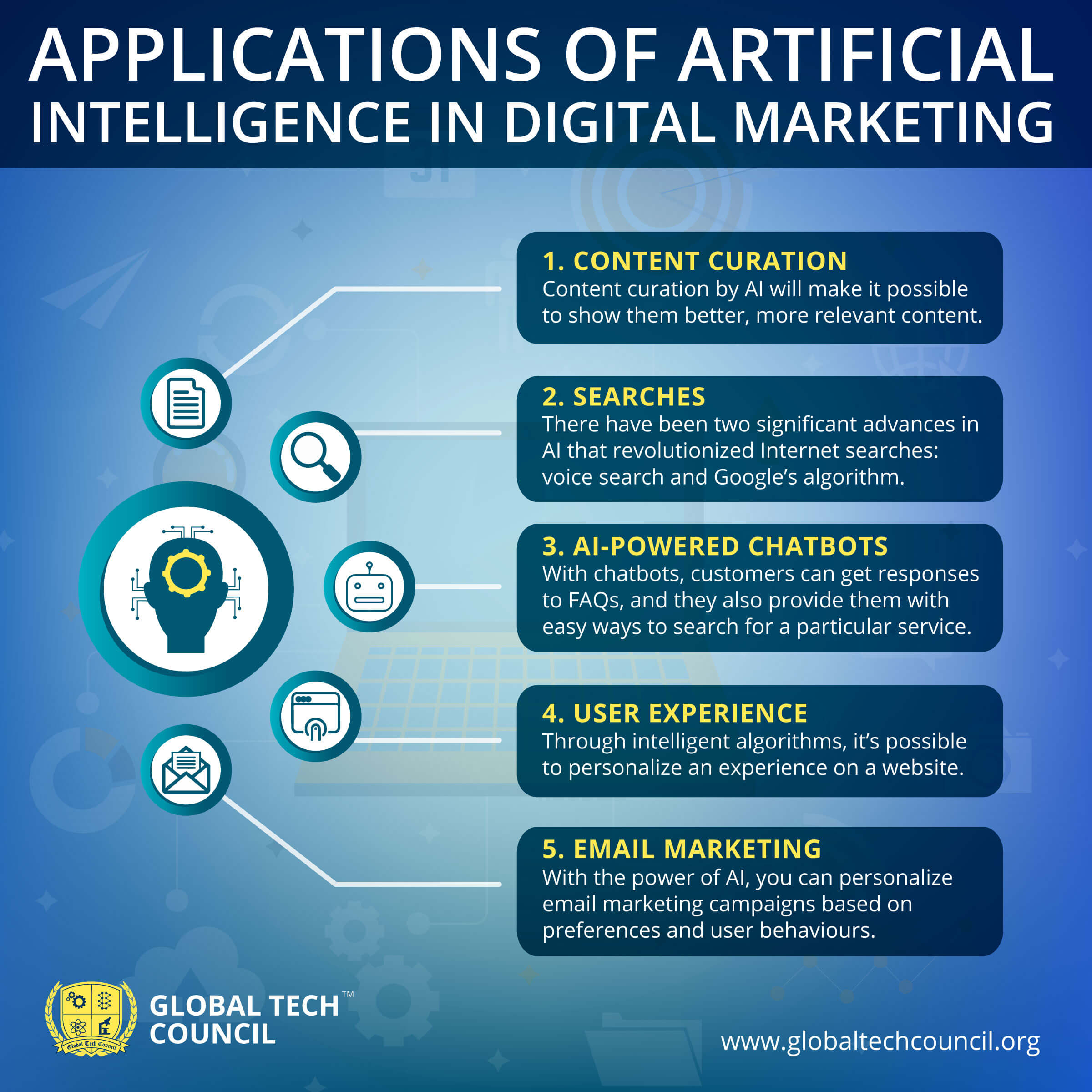
A fundamental shift is underway in how people discover products, services, and solutions. Instead of scrolling through ten blue links, users increasingly type a question into ChatGPT, Perplexity, or Google's AI Overview — and receive a synthesized answer that names only a handful of brands. If yours isn't one of them, the customer's journey may end before they ever find you.
This isn't speculation. AI search platforms are already shaping purchasing decisions at scale — and the window to establish early visibility is still open for small brands willing to act strategically.
Why AI Visibility Is the New SEO
Traditional SEO operated on a clear premise: rank your pages higher, get more clicks, drive more traffic. AI search breaks every one of those assumptions. When a user asks an AI assistant "what's the best tool for X," the platform synthesizes a response from dozens of sources — and presents a single, confident answer. There are no page-two results. There's no position #5 to aspire to.
Visibility in AI is binary in the most brutal sense: your brand is either part of the answer, or it doesn't exist in that moment.
Over 70% of searches now end without a click to any website. Gartner projects traditional search engine volume will drop 25% by 2026 as chat-based platforms capture discovery intent. Brands that ignore AI visibility aren't just missing a channel — they're watching their primary acquisition funnel shrink.
This creates what practitioners are calling Generative Engine Optimization (GEO) — a distinct discipline from traditional SEO focused specifically on earning mentions, citations, and recommendations inside AI-generated responses. The GEO market was valued at $848 million in 2025 and is projected to reach $33.7 billion by 2034. The momentum is real, and so is the opportunity for brands that move early.
How AI Models Decide Which Brands to Mention

Before optimizing for AI visibility, it's essential to understand how these systems actually work — and it's quite different from Google's link-based ranking logic.
As Rand Fishkin of SparkToro put it plainly: the currency of large language models is not links — it's mentions. Specifically, words that appear frequently near other words across training data. For models drawing on live retrieval (like Perplexity), citation logic is closer to real-time indexing. But for LLMs trained on static data (like base ChatGPT), your visibility depends on how consistently your brand has been mentioned and discussed across the web over time.
The Key Signals AI Models Use
Third-party mentions carry massive weight. Research from AirOps found that brands are 6.5× more likely to be cited in AI responses via third-party sources than from their own domains. Your website alone cannot get you mentioned — you need an ecosystem of external coverage.
Co-citation patterns establish your category. When your brand appears repeatedly alongside established competitors in industry roundups, comparison articles, and expert lists, AI models begin to classify you as a comparable solution. Getting into "best of" lists isn't just good for traffic — it's how AI learns what category you belong in.
Content recency matters more than many expect. Pages updated within two months earn 28% more AI citations than older content, and pages with FAQ sections earn measurably more citations on average.
Community presence is disproportionately powerful. Reddit accounts for 46.7% of Perplexity's top 10 most-cited sources. This is a democratizing force for smaller brands — community presence is accessible at any stage of growth.
AI models don't rank pages — they build probability distributions. Your brand doesn't "rank #1" in ChatGPT; it has a probability of being mentioned that fluctuates based on how consistently it appears across high-quality sources. The goal is to increase that probability, across as many relevant queries as possible.
7 Proven Strategies for Small Brands
The good news for smaller brands: AI visibility rewards consistency and relevance over raw domain authority. Here are the strategies that are working right now.
Structure your web pages to directly answer the questions your customers ask AI assistants. Lead with the answer — use clear headings, concise summaries at the top, and FAQ sections that mirror real conversational queries.
Content over 1,500 words earns more citations, but the sweet spot is 100–150 words per section. Structure your content so an AI can extract a crisp answer from any section independently.
Because brands are 6.5× more likely to be cited through third-party sources, earned media is your highest-leverage investment. Prioritize getting covered in respected trade publications, industry newsletters, and authoritative review sites.
Don't wait for big-name press. Niche, authoritative outlets in your specific vertical carry significant weight with AI systems. A review on a respected industry blog can move the needle more than a brief mention in a general publication.
Co-citation is how AI learns you belong in a category. When your brand appears in articles alongside established players — "10 Best Tools for X," "Alternatives to [Competitor]," "Top Platforms for Y" — you become associated with that solution space.
Reach out to content creators and review platforms proactively. Offer trials, data, or quotes. The more consistently your brand appears in category-defining lists, the stronger your association with that category becomes.
Reddit is not a secondary channel anymore — it's the single most-cited source in Perplexity responses and a significant signal across other platforms. A focused, authentic presence in two or three relevant subreddits can produce AI citations at any brand scale.
The key word is authentic. Provide real value in discussions. Answer questions thoroughly. Share insights without constantly self-promoting. AI models pick up contextual discussions where your brand is recommended by real users.
AI models build an internal representation of your brand from all available sources. Inconsistent naming, category descriptions, or positioning across your site, directories, and social profiles fragments that model — producing missing or inaccurate citations.
Audit your brand name, description, and product category across every touchpoint: your website, Google Business Profile, LinkedIn, Crunchbase, and industry directories. Fix this before investing heavily in content or PR.
None of your content optimization matters if AI crawlers can't access it. Check your robots.txt for GPTBot (OpenAI), ClaudeBot (Anthropic), and PerplexityBot — each operates independently, so blocking one doesn't affect the others.
Critically: AI crawlers do not execute JavaScript. If your site relies heavily on client-side rendering without server-side rendering, large sections of your content may be invisible to AI systems entirely.
Recency and specificity are measurable AI citation signals. Content updated within two months earns notably more citations than older pages. Content with original statistics and specific data points achieves 30–40% higher visibility in AI responses.
For small brands, this doesn't require a research budget. Conduct simple customer surveys. Publish annual "state of" reports for your niche. Data that doesn't exist elsewhere has outsized citation value — AI systems are drawn to novel, attributable information.
Platform Differences: Not All AI Is the Same
A critical mistake brands make is treating AI visibility as a single channel. ChatGPT, Perplexity, and Google AI Overviews operate on fundamentally different citation logic — and a strategy built for one may underperform on another.
| Platform | Citation Source | Reddit Weight | Key Signal | Update Speed |
|---|---|---|---|---|
| ChatGPT | Training data (+ browsing) | Medium | Backlinks, authoritative domains | Slow (model updates) |
| Perplexity | Live web retrieval | Very High (46.7%) | Community discussion, crawlability | Real-time |
| Google AI Overviews | Google index | Low–Medium | Domain authority, traffic volume | Fast (Google cadence) |
| Gemini | Google index + training | Low | Google ranking signals | Moderate |
The practical implication: diversify your efforts across both owned content and community platforms. A brand heavily invested in PR will perform well in ChatGPT but may be invisible in Perplexity without a Reddit presence. Conversely, strong community presence without crawlable on-site content leaves opportunities on the table across every platform.
Perplexity does not require brand scale — it requires crawlable content, community presence in relevant subreddits, and consistent entity signals. A focused strategy on those three areas produces Perplexity citations for brands at any stage. This levels the playing field significantly against larger competitors.
Quick Wins You Can Do This Week
Not all GEO improvements require months of content investment. Several high-impact actions can be completed in days and begin influencing AI visibility quickly.
Check that GPTBot, PerplexityBot, and ClaudeBot are not blocked. Many sites block all bots by default — this is an invisible brand killer.
Add question-and-answer sections to your top 5 pages. Pages with FAQ content earn measurably more AI citations on average.
Manually prompt ChatGPT, Perplexity, and Gemini with your most important category queries. Document what you see — and what competitors appear instead.
Ensure your brand name, one-line description, and product category are identical across your website, LinkedIn, Crunchbase, and G2 / Capterra.
Identify 2–3 active subreddits where your target customers ask questions. Spend one hour per week providing genuinely helpful answers.
Update the timestamp and content of your five most important pages. Recency is a measurable signal — pages updated within 2 months earn significantly more citations.
How to Know If It's Working
AI visibility doesn't show up in Google Search Console. You need a distinct measurement approach that accounts for the probabilistic nature of LLM responses.
Manual Tracking (Free, Time-Intensive)
Identify your 10–15 most important category queries, then run each prompt across ChatGPT, Perplexity, and Google AI Overviews weekly. Log whether your brand appears, where it's positioned, and which sources are cited. Repeat each prompt multiple times — LLM responses vary, and a single run tells you nothing meaningful about your actual probability of mention.
Automated Monitoring Tools
For consistent tracking at scale, several platforms now offer dedicated AI visibility monitoring. Tools like Otterly.AI, GrowByData, and LLM Pulse automate prompt testing across platforms, track brand mention rates over time, and surface competitor visibility data. HubSpot also offers a free AEO Grader that benchmarks your brand perception across ChatGPT, Perplexity, and Gemini — a useful diagnostic starting point.
Achieving statistically valid AI visibility measurements requires 60–100 prompt runs per query — not one. The inherent randomness of LLM inference means a single check is anecdote, not data. Automated tools handle this volume reliably; manual tracking should at minimum repeat each prompt 5–10 times and average results.
Leading Indicators to Watch
Beyond direct AI mention tracking, several traditional metrics serve as leading indicators: growth in direct traffic and branded search volume (users discovering your brand through AI, then searching directly); increase in referral traffic from Reddit; and inbound mentions from industry publications and review sites.
The long-term metric that matters most is Share of Voice — how often your brand appears relative to competitors across the same set of queries. Track this monthly, and treat it like the strategic asset it is becoming.
Ready to Start Your GEO Audit?
Understanding your current AI visibility is the first step. Find out where you stand — and where your competitors are beating you — before optimizing.
Run a Free GEO Audit →